

OpenAI’s $1 Billion Data Center in India: A Deep Dive into the Future of AI Infrastructure
Introduction
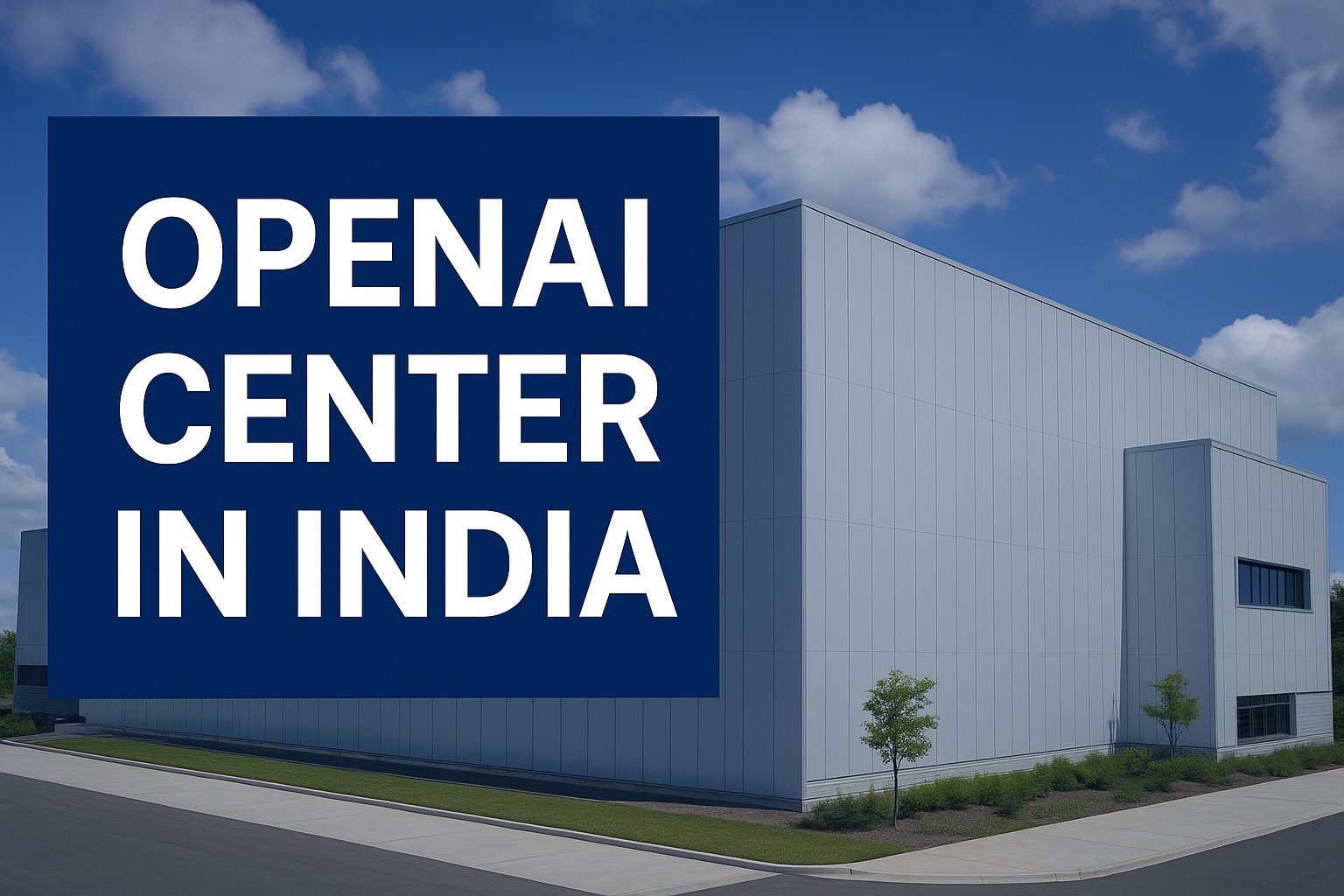
OpenAI, the San Francisco-based AI research and development company behind ChatGPT, is expanding globally. In a big move that shows how important India is in the global AI landscape, OpenAI is investing heavily in the country by building a $1 billion data center. This will be part of OpenAI’s Stargate project, a global infrastructure initiative to scale the company’s AI computing power across the world.
India is already OpenAI’s second largest market by user base and will be a key hub for the company. This article explores the scope, scale and impact of OpenAI’s investment in India, focusing on infrastructure, technology, partnerships, economic impact and what this means for the future of AI locally and globally.
Why India? The Strategic Importance
Growing User Base
India has become one of OpenAI’s fastest growing markets. With a large population of digitally active citizens, affordable internet and an increasing number of tech-savvy professionals, the country is a fertile ground for AI adoption. In fact, reports suggest 3x growth in ChatGPT users in 2024 in India, making it a natural choice for deeper investment.
Compliance & Data Localization
India’s government has been advancing regulations for local data storage and processing. By setting up a data center in the country, OpenAI is enhancing its compliance and building trust among Indian enterprises, startups and users who are increasingly concerned about data sovereignty.
Ecosystem Synergy
Indian startup ecosystem is vibrant with thousands of AI and machine learning startups growing rapidly. By investing in India, OpenAI is positioning itself to collaborate with these players, develop talent and integrate into a larger AI innovation ecosystem.
Stargate Project: Scaling AI Infrastructure
OpenAI’s investment in India is part of its larger Stargate initiative—a multibillion-dollar global project to build massive AI data centers to meet the growing demand for compute. According to Bloomberg and Reuters, Stargate’s global investments could be $500 billion over time.
Size of India’s Facility* 1 gigawatt of power planned for the India center, potentially the largest AI facility in Asia.
- Total project cost could be $50 billion, with $35 billion in hardware and $15 billion in infrastructure and energy systems.
- Backed by Microsoft and powered by high-performance Nvidia GPUs, the center will be a hub for global AI model training and deployment.
Technology
- Nvidia Hardware: A significant portion of the investment will go into Nvidia H100 and next-gen GPUs, the backbone of AI model training.
- Energy Efficiency: The facility will deploy advanced cooling and green energy solutions to manage power consumption.
- Global Network: The India hub will be connected to OpenAI’s US and Middle East facilities,
Economic Impact of OpenAI’s Investment in India
Direct Job Creation
- Data center construction alone will create thousands of jobs in civil engineering, construction, and energy.
- Once operational, the facility will employ professionals in data science, software engineering, hardware maintenance, AI research, and cybersecurity.
Boosting India’s Digital Economy
The investment contributes directly to India’s goal of becoming a $1 trillion digital economy by 2030. By anchoring high-end AI infrastructure locally, OpenAI enables Indian businesses to develop world-class AI applications without relying on overseas servers.
Partnerships with Local Players
OpenAI is reportedly in discussions with Indian telecom operators, cloud service providers, and renewable energy firms. These partnerships will expand local capacity while ensuring sustainability.
Benefits for Indian Businesses & Startups

Reduced Latency & Better Access
By hosting AI workloads locally, OpenAI ensures faster response times for Indian users. Enterprises relying on ChatGPT Enterprise or custom GPT solutions will experience smoother, more efficient interactions.
Enterprise AI Growth
With OpenAI’s infrastructure rooted in India, businesses can integrate AI more deeply into sectors like healthcare, finance, education, and logistics.
Startup Enablement
AI startups often struggle with high compute costs. By bringing infrastructure closer, OpenAI could reduce barriers to entry, allowing Indian entrepreneurs to train and deploy AI models more affordably.
Policy & Regulatory Implications
Data Localization Alignment
India has been pushing for data sovereignty, requiring sensitive data to remain within the country. OpenAI’s facility directly aligns with this push, demonstrating compliance and boosting trust with regulators.
Cybersecurity Considerations
With massive data centers come cybersecurity risks. OpenAI is expected to collaborate with Indian regulatory bodies to ensure robust cyber resilience and ethical AI standards.
AI Governance
India’s government has expressed interest in AI governance frameworks, balancing innovation with safeguards. OpenAI’s deeper presence could accelerate India’s participation in shaping global AI policy.
Challenges Ahead

While the investment promises immense potential, challenges remain:
- Infrastructure Readiness: Ensuring stable electricity supply, renewable energy integration, and cooling systems for a gigawatt-scale center.
- Talent Shortage: While India has a large tech workforce, the demand for specialized AI hardware engineers and AI safety researchers will surge.
- Regulatory Hurdles: Navigating India’s evolving digital regulations may require sustained lobbying and partnerships.
- Competition: Google, Amazon, and Meta are also expanding AI infrastructure in India, sparking an AI infrastructure race.
How OpenAI’s Move Shapes the Global AI Race
Geopolitical Angle
India’s growing role as an AI hub places it strategically between the U.S. and Asia. By investing in India, OpenAI ensures it has a stronghold in a neutral, democratic, and rapidly growing market.
Rivalry with Other Tech Giants
Amazon Web Services, Google Cloud, and Microsoft Azure are heavily investing in India. OpenAI’s direct infrastructure presence adds competitive intensity, likely sparking lower AI service costs and faster innovation.
Nvidia’s Windfall
With the facility expected to purchase billions of dollars’ worth of Nvidia GPUs, the chipmaker stands to gain massively from OpenAI’s India expansion.
Future Outlook

Timelines
While OpenAI has not yet announced exact timelines, industry analysts expect construction to begin by 2026, with initial operations possibly starting by 2027–28.
Integration into Daily Life
As OpenAI expands its footprint, Indian users could see:
- Smarter AI tools with local context (e.g., language models tuned to Indian languages).
- Affordable enterprise solutions built on OpenAI’s infrastructure.
- AI in governance and public services, enabled through partnerships with government agencies.
Ripple Effects Across Asia
India’s facility may serve as a regional hub for neighboring countries in South Asia, making OpenAI the default AI infrastructure provider for the region.
Conclusion
OpenAI’s plan to build a $1 billion-scale data center in India represents far more than just another infrastructure project. It’s a strategic bet on the future of AI, a recognition of India’s importance in the global tech ecosystem, and a catalyst for transforming how AI is developed, deployed, and consumed in the region.
For India, the move reinforces its position as a rising digital powerhouse. For OpenAI, it ensures proximity to one of its largest user bases, compliance with local regulations, and integration with a thriving AI ecosystem.
In the broader picture, this investment may mark the beginning of an era where India becomes a core hub of global AI innovation, influencing not just how AI is built, but how it is governed, deployed, and democratized for billions of people worldwide.








weed chocolates online store
best indica gummies online for deep calm and rest